

The Therapeutic Benefits of Healing in Comfort and Privacy
There’s something people don’t talk about enough when it comes to addiction treatment—where you heal matters just as much as how you heal. You can have the best therapists and the most proven treatment protocols, but if you’re recovering in an environment that feels clinical, impersonal, or just plain uncomfortable, you’re fighting an uphill battle from the start.
Privacy plays a bigger role than most people realize. When you’re dealing with addiction, you’re already vulnerable. The last thing you need is sharing a cramped room with strangers or worrying about who might see you coming and going from treatment. A private bedroom isn’t just about luxury—it’s about creating space where you can actually process what you’re going through without continuous distractions. This certainly matters when you’re trying to accomplish the hard work of recovery.
How Serene Settings Accelerate the Healing Process
Research backs up what common sense already tells us: natural surroundings help people heal faster. Studies on addiction recovery consistently show that access to nature and outdoor spaces improves outcomes for those who are dealing with substance abuse and mental health challenges.
Think about where most people develop their addiction. Often it’s in chaotic, stressful environments—urban areas with constant noise, high-pressure work situations, or home settings filled with triggers. Removing yourself from that chaos and placing yourself in a peaceful setting isn’t running away from problems. It’s giving your brain the reset it desperately needs.
Personalized Care: The Power of Individual Attention
Standard rehab facilities often house 60, 80, or sometimes over 100 patients at once. The staff does their best, but the math doesn’t work in anyone’s favor. You typically receive group sessions where you barely speak, and individual therapy maybe twice a week, if you’re lucky. Treatment plans that follow templates rather than addressing your specific situation.
Luxury treatment centers flip that equation. With ratios such as three staff members per client, you’re not just another case file. Your treatment team actually knows you—your history, your triggers, what motivates you, what scares you. They can adapt your program in real-time based on how you’re responding. That level of attention isn’t indulgent. It’s what effective treatment actually requires.
Having access to specialists matters too. At larger facilities, you may work with whoever’s available. In a more intimate setting, you are matched with therapists whose expertise aligns with your needs—struggling with trauma? You’ll work with someone who is trained in trauma-informed care. Dealing with co-occurring anxiety or depression? There’s a specialist for that, too. This is not luxury for luxury’s sake—it’s smart, targeted treatment.
Supporting Long-Term Success Through Holistic Wellness
Here’s where the environment truly proves its worth: recovery isn’t just about stopping substance use. It’s about rebuilding your entire approach to living. This requires addressing physical, mental, emotional regulation, and stress management—all at once.
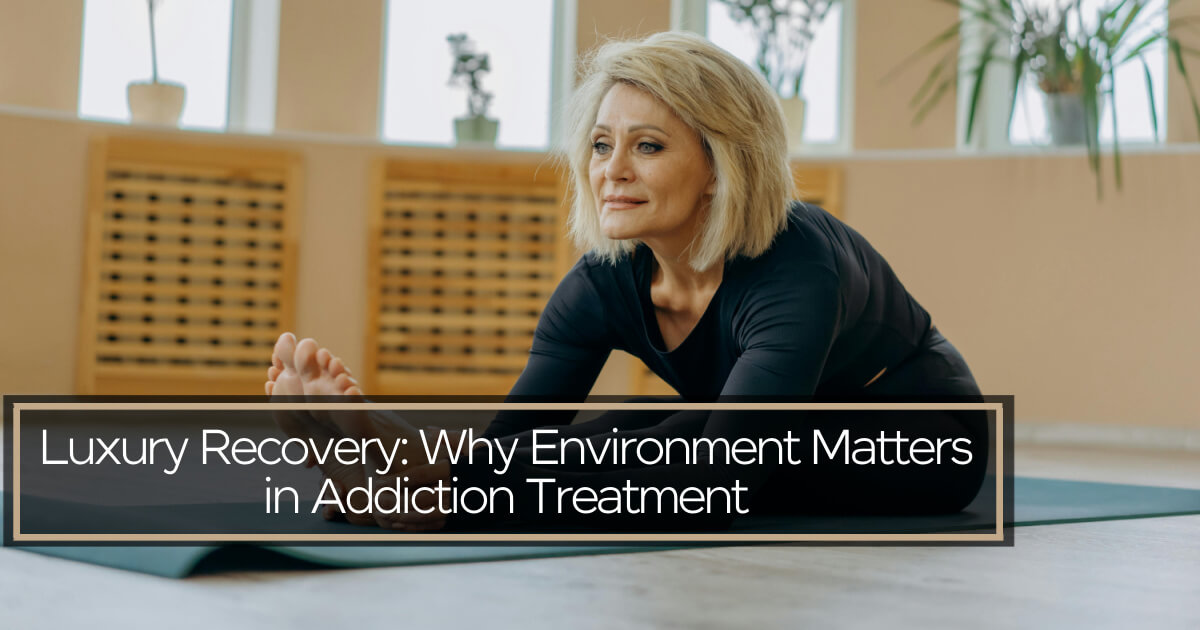
When treatment centers include activities such as yoga, meditation, equine therapy, fitness training, and proper nutrition, they’re not simply adding fancy extras. They’re teaching you sustainable tools for managing life without turning to substances. The gourmet meal, which a chef prepares, isn’t just about pampering—it’s about fueling your body properly, maybe for the first time in years. Those fitness classes aren’t simply recreational fluff—they help restore the physical damage that addiction caused while teaching you healthy coping mechanisms.
The location matters for practical reasons as well. Being on a private estate means encountering fewer distractions and triggers. You’re not walking past liquor stores or running into people from your using days. You’re completely immersed in recovery, which research shows is precisely the formula that works. Studies regarding residential treatment consistently demonstrate that longer stays in supportive therapeutic environments lead to better outcomes and higher long-term recovery rates.
Creating an environment that supports each aspect of healing—physical, mental, emotional, spiritual—isn’t about making treatment easy. Recovery is never easy. But, done correctly, it removes unnecessary obstacles and provides the foundation that people need to do the difficult work ahead. When you’re not fighting your surroundings, you can focus all of your energy on fighting your addiction.
The right environment doesn’t guarantee recovery. Nothing does. But it creates the conditions for lasting change to become possible. And for people who’ve struggled for years in other settings, that difference may be everything.